Explore
A village on a long beach
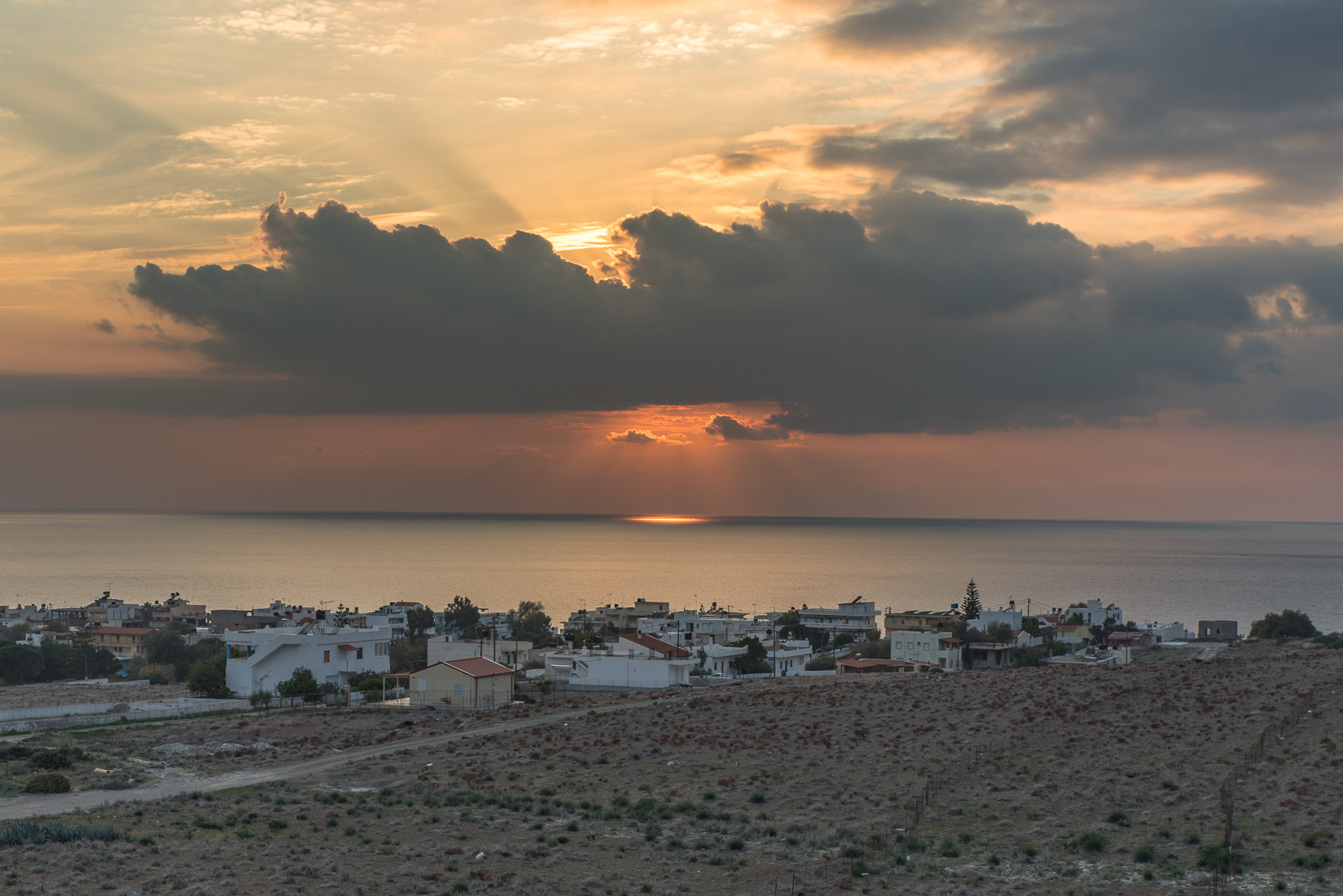
Kalamaki faces west across the Messara bay, towards the Paximadia islets and the sunset.
- 50 m from the door to the sea
- 30 min along the sand to Kommos
- West facing the sunset
- 15 min by car to Phaistos
The beach
One beach, kilometres long
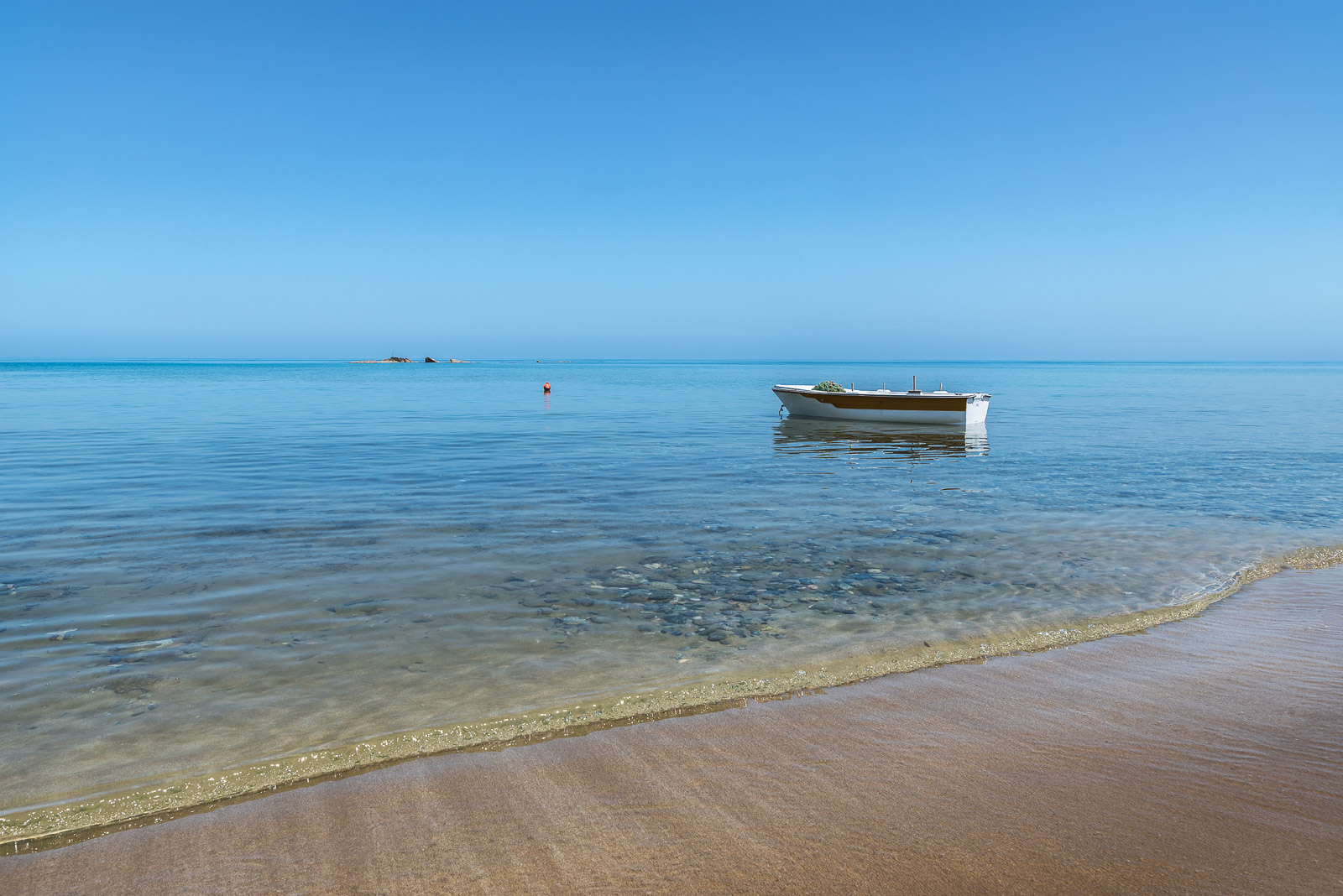
Kalamaki sits on one continuous beach that runs along the Messara bay, among the longest in Crete. To the north it carries on past dunes and wetland towards Afrathias; to the south, about two kilometres away, it becomes the beach of Kommos.
The sand is coarse, and the seabed is mostly rock, with some sandy patches, fine pebbles and scattered stones. In front of the village the beach is organised, with umbrellas, showers, a playground and tavernas, which makes it an easy, quiet place for a family holiday.
The water is very clean, but this is the open sea. The coast faces the westerly winds that blow often in summer, and on those days the waves can be strong: take care when it is rough, and keep an eye on children, because the water gets deep quickly. When the wind is up, we send swimmers to Kaloi Limenes, on the south coast to the east, which is more sheltered.
The sunsets
Because the beach looks west, the sun goes down over the sea every evening, behind the two Paximadia islets. To the north-west, the south coast of the island runs on towards Rethymno and Chania, and on very clear days the island of Gavdos appears faintly on the horizon. From the roof terrace of the first-floor apartment you see all of it.
A walk along the sand
Kommos, the Minoan harbour
Walk south along the water for about half an hour and you reach Kommos. The beach here is sandy and wide, with sunbeds and a canteen near the archaeological site; its northern part is quieter, and partly naturist.
Four thousand years ago this was the harbour of Phaistos. Founded around 2000 BCE, it had a harbour, warehouses, sheds for ships and a large court. The excavation is fenced and closed to visitors, but you can see it from the fence.
Neighbours on the beach
The loggerhead turtles
The whole Messara bay is a protected Natura 2000 area, and one of the places where the loggerhead sea turtle, Caretta caretta, comes ashore to lay its eggs. From May to September the turtles lay their eggs in the sand, and the conservation group ARCHELON records and protects the nests. We see the most nests in the summer months, and if you are lucky you may see the hatchlings head for the sea, late in the summer or in early autumn.
You can help them with a few simple habits:
- Keep away from marked nests.
- Don’t walk on the beach at night in summer, and keep lights off the sand.
- Leave no sunbeds or umbrellas on the beach overnight.
- No cars on the sand, and no parties on the beach at night.
Without the car
A holiday on foot
Kalamaki is small enough to leave the car parked for days. The square is 120 metres from the apartments, with tavernas and cafés, a supermarket, a bakery for breakfast and a cash machine. The nearest pharmacy is up the hill in Kamilari, two and a half kilometres away.
For longer walks, the Minoan tomb of Kamilari, among the olive groves, is 45 minutes to an hour on foot, and Kommos half an hour along the beach. If you want to see more of the island, Phaistos, Matala and the mountain villages are an easy drive away; buses don’t reach everywhere, so a car helps for day trips.
The village celebrates its feast on 20 July, the day of the Prophet Elias.
Early and late in the season
We are open from April to early November. The summer months, May to September, are hot, and July and August the busiest. Spring and autumn are calmer, and many older guests choose them. Kalamaki is a summer village: the supermarket opens for about seven months of the year, and in winter only one taverna and one café stay open, at weekends. Late in the season, Kamilari, five minutes up the hill, has more open.
A Cretan village with character
Kamilari, up the hill
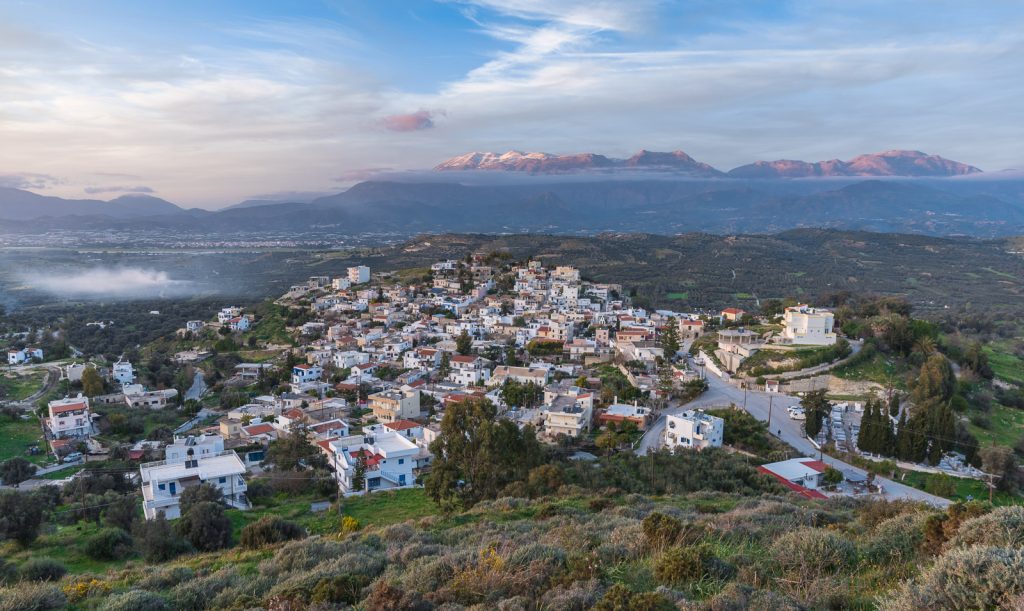
Like almost all the old villages of Crete, Kamilari was built on a hilltop: high enough to watch for raiders, and leaving the flat land below for farming. It is a village with hundreds of years of recorded history, only a couple of kilometres from Phaistos and Agia Triada, two of the most important archaeological sites of the Minoan era. The family’s other four apartments are there.
Further afield
Phaistos is about fifteen minutes by car, and Matala with its caves about twenty. Pitsidia and Tympaki are fifteen minutes away, Moires twenty. Go to Tympaki on a Friday or Moires on a Saturday for the street market. Gortyn is about half an hour away, Agia Galini 35 minutes, and the village of Zaros with the Votomos lake about forty.
Nearby places
Distances are measured in a straight line from Kalamaki; by road they are longer.
Beaches
Archaeological sites
Other places of interest
Also by the family
Irini Kamilari, up in the village
Four apartments in Kamilari, a short drive up the road, close to Phaistos.
Visit kamilari-apartments.com